
- Home
- The Strange Houseguest on Your Wall
The Strange Houseguest on Your Wall
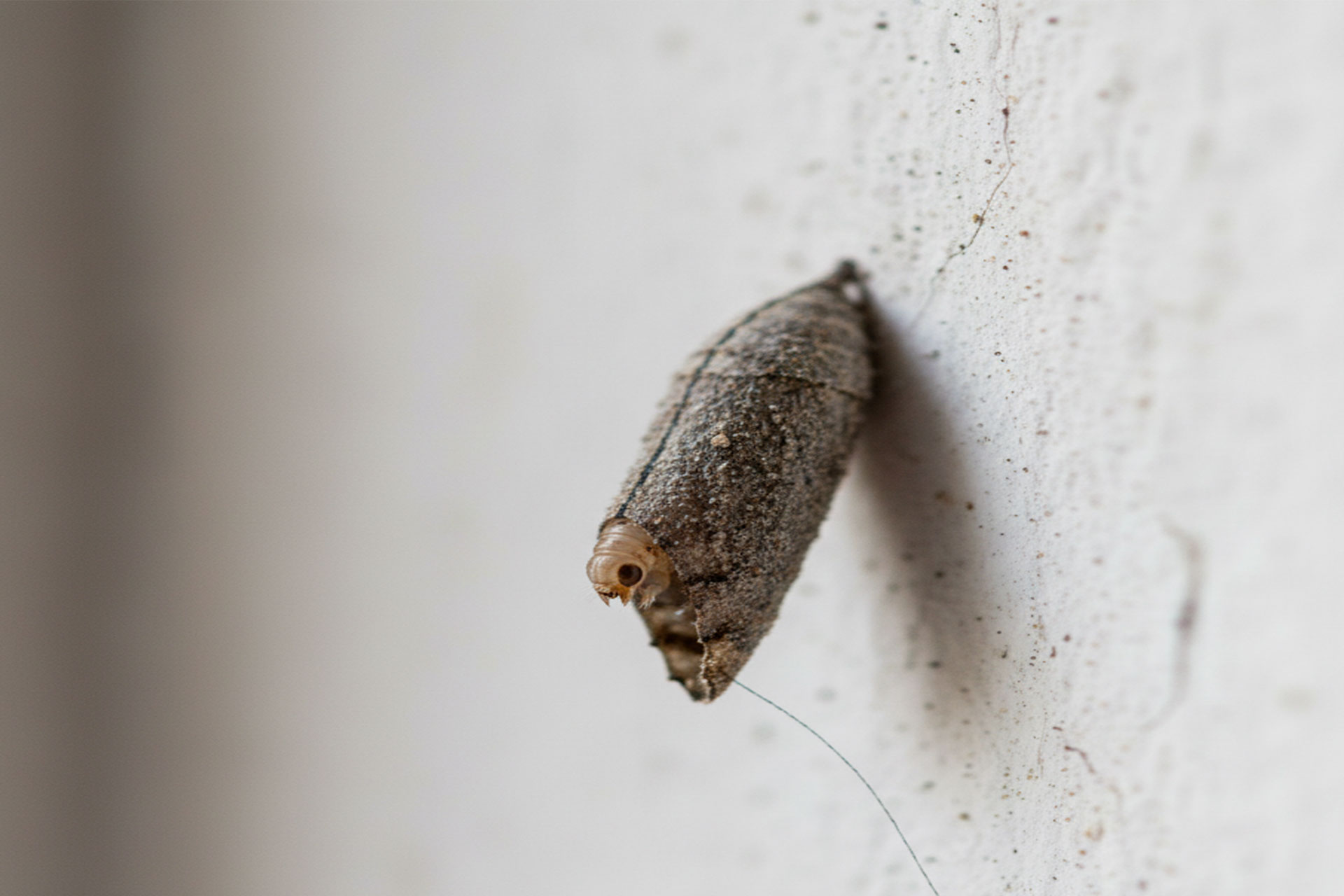
It was a Saturday afternoon when Kwaku spotted it—something small and gray clinging to the corner of his ceiling. At first glance, it looked like a piece of lint stuck to the paint, nothing worth a second thought. He fetched a broom to sweep it away.
But something about its shape made him pause. It wasn’t just a blob. It was a tiny, tube-like case, almost the size of a pumpkin seed. By the next day, another appeared, and then another.
He realized he wasn’t dealing with dust. He had tenants.
A Case-Bearing Architect
That odd little case belonged to a kamitetep moth larva—what scientists call Phereoeca uterella. Known in some places as the plaster bagworm, it’s a distant cousin of the clothes moth. But instead of nibbling directly on your garments, it builds a home of silk, dust, and sand—dragging it around like a portable tent.
The case has two open ends, so the larva can crawl forward or backward without ever exposing its soft body. When danger comes, it simply tucks back inside.
Kwaku couldn’t help but be impressed. A self-built, mobile fortress—better than some landlords he’d dealt with.
Eating in the Shadows
Admiration quickly faded when he learned what they eat. These quiet little residents don’t go after rice or sugar. No, they’re after hair, spider webs, wool, even old paper.
That tiny hole in the sleeve of Kwaku’s favorite sweater? The unexplained frayed corner of an old notebook? Likely the handiwork of these dusty architects.
A Moth That Doesn’t Eat
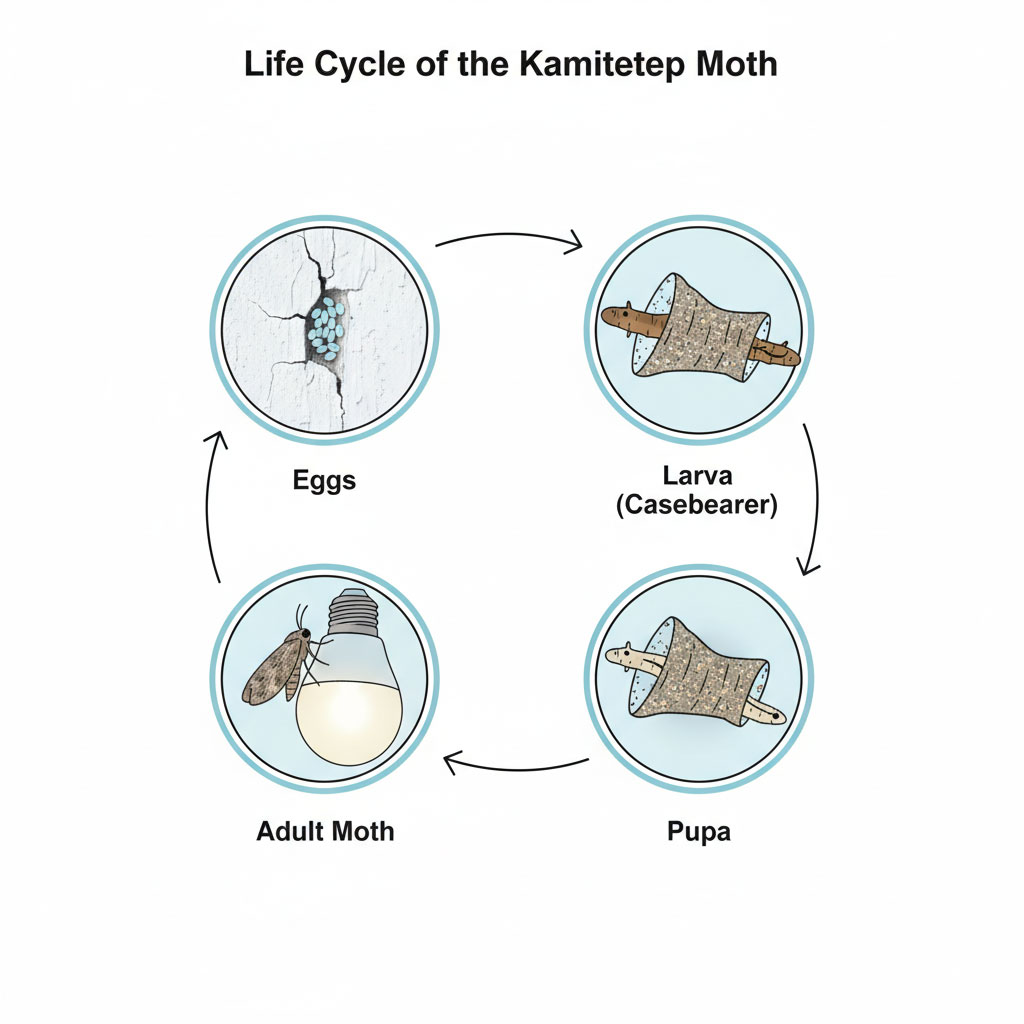
When the larva finally grows up, it transforms into a modest gray moth that flutters weakly near lightbulbs. Unlike most insects, the adult kamitetep doesn’t eat at all. Its only job is to reproduce. A female can lay up to 200 eggs, and then her brief life is over.
It’s a life cycle that plays out silently in homes across Ghana—often unnoticed until the damage appears.
Keeping Them in Check
The good news? Kamitetep moths aren’t dangerous. They don’t bite or spread disease. But left alone, they can quietly ruin clothes, rugs, and books.
The best defense is vigilance:
- Clean regularly, especially hidden corners and under furniture.
- Control humidity, since they love damp places.
- Store fabrics properly in sealed containers.
- And if you see one of those dusty cases—dispose of it quickly.
For stubborn infestations, call in a fumigation expert or pest control artisan who can safely treat your home. Sometimes, a quick professional job prevents months of damage.
Kwaku learned that fighting back didn’t require chemicals alone, just better housekeeping and knowing when to get expert help.
The Takeaway
Now, whenever he notices one of those strange gray cases on the wall, Kwaku doesn’t mistake it for dirt. He knows it’s a kamitetep—an odd little houseguest, equal parts nuisance and marvel.
And maybe, just maybe, he respects it a little too. After all, not many creatures can build a mobile home out of dust and silk.
Did You Know?
The kamitetep’s case is open at both ends, which means the larva can crawl backward as easily as forward. Nature’s very own moonwalker!
Need Help?
Don’t let hidden pests take over your home. Hire trusted fumigation and pest control artisans on Boafone today to keep your space clean, safe, and pest-free.