
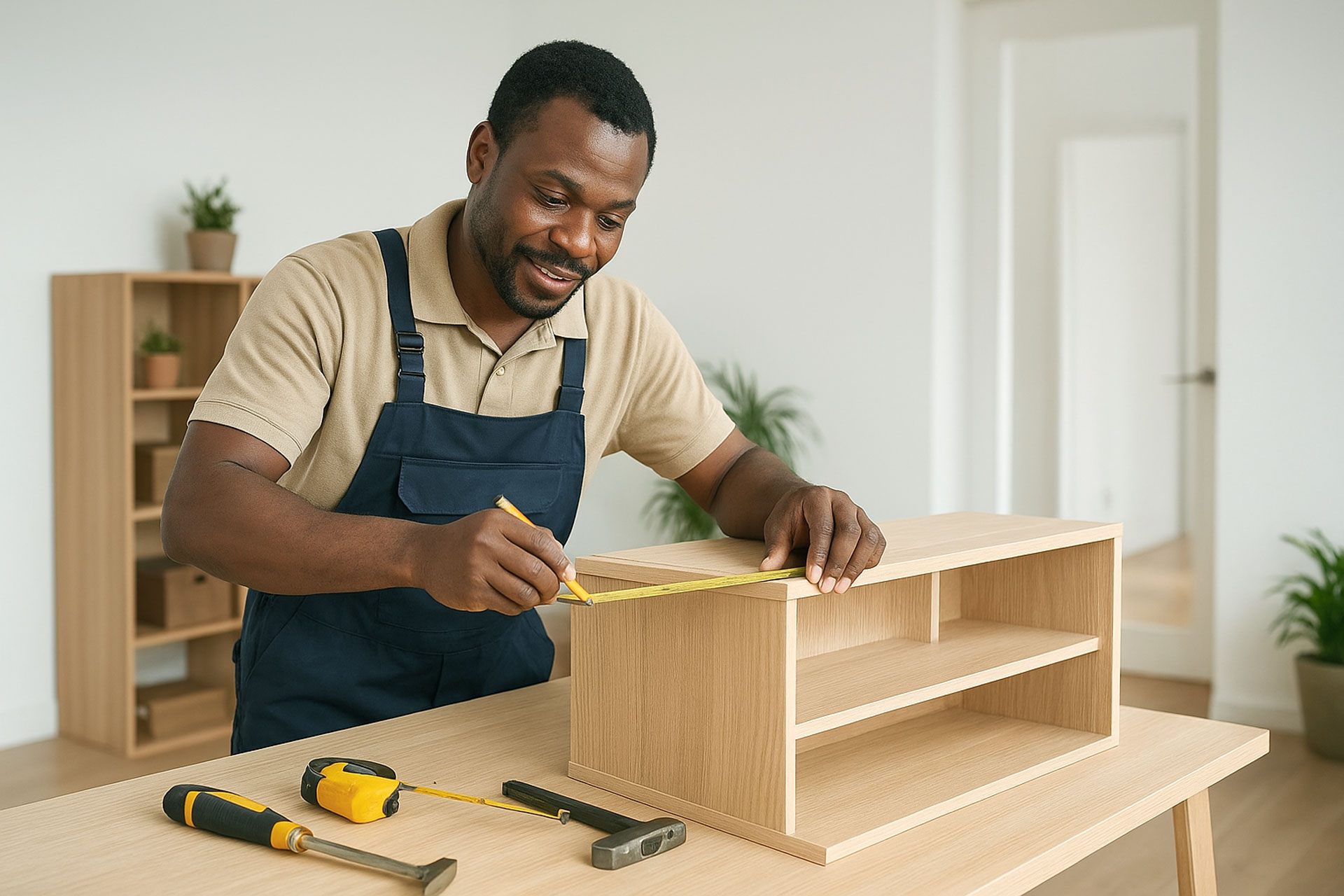
The Value of Skilled Carpentry in Ghanaian Homes
Introduction
Behind every well-fitted wardrobe, sturdy kitchen cabinet, or elegant TV stand in a Ghanaian home, there is often a carpenter whose work speaks louder than his name. Yet, the journey of many skilled carpenters is rarely told. They are the backbone of comfort and design in our living spaces, but their value is often underestimated until something goes wrong.
This article tells the story of Kwame Mensah, a carpenter in Accra, whose path reveals both the struggles and the strengths of artisans across Ghana and why homeowners benefit when they invest in skilled craftsmanship.
The Struggles of Being a Carpenter in Ghana
Carpentry is a respected but demanding trade. Many carpenters begin their careers under apprenticeship, learning by doing rather than through formal schooling. But even with skill, the challenges are real:
Trust issues with homeowners– Many clients fear shoddy work, unfinished projects, or poor finishing, which makes them hesitant to hire unknown carpenters.
Payment problems– Advance payments can be delayed or withheld, making it hard for artisans to buy materials and keep their work moving.
Undervaluing the trade– Some homeowners prioritize low cost over quality, often opting for “quick work” that does not last.
For Kwame, these issues were once daily battles. “I lost many jobs in the beginning because people didn’t trust me,” he recalls. “Some clients even thought carpenters are only after money. But I had to prove with every job that my hands could add value to their homes.”
Building a Reputation Through Skill and Professionalism
What changed Kwame’s story was consistency and professionalism. Instead of cutting corners, he focused on delivering durable furniture with a clean finish.
He started providing simple sketches and cost breakdowns before taking on work, something many clients found refreshing.
He invested in better tools to ensure precision.
He practiced punctuality and good communication, making homeowners feel respected.
Slowly, word spread. From making small shoe racks for neighbors, Kwame grew to designing modern kitchens, fitted wardrobes, and entertainment units for clients in East Legon and Tema. His reliability set him apart.
Why Skilled Carpentry Matters for Homeowners
The value of a skilled carpenter goes beyond wood and nails. For homeowners, it means:
Durability: Properly constructed furniture can last 10–20 years without repair.
Customization: Carpenters tailor designs to fit the exact dimensions and style of your home.
Long-term savings: Quality furniture prevents the cycle of constant replacements caused by poor workmanship.
Home value: Well-designed built-ins like wardrobes and cabinets increase property appeal.
In Kwame’s words: “When I do good work, the client saves money in the future. A strong wardrobe won’t collapse in three years. A well-fitted kitchen makes cooking easier and the home more beautiful. That is my pride.”
Lessons for Artisans and Homeowners
The carpenter’s story carries lessons for both sides of the construction relationship:
For artisans: Professionalism matters. Reliability, clear communication, and respect for the client build trust as much as technical skill does.
For homeowners: Value artisans not just for their labor, but for their craftsmanship. Paying fairly and respecting timelines ensures you get durable, beautiful results.
Conclusion
Carpenters like Kwame are more than just “workers.” They are designers, builders, and problem-solvers who help shape the homes we live in. In a market where trust and quality are often in question, their stories remind us that professionalism and skill are worth every cedi.
At Boafonie, we believe every homeowner deserves access to skilled, reliable artisans and every artisan deserves recognition for their craft. When the two meet, Ghana builds not just houses, but homes.